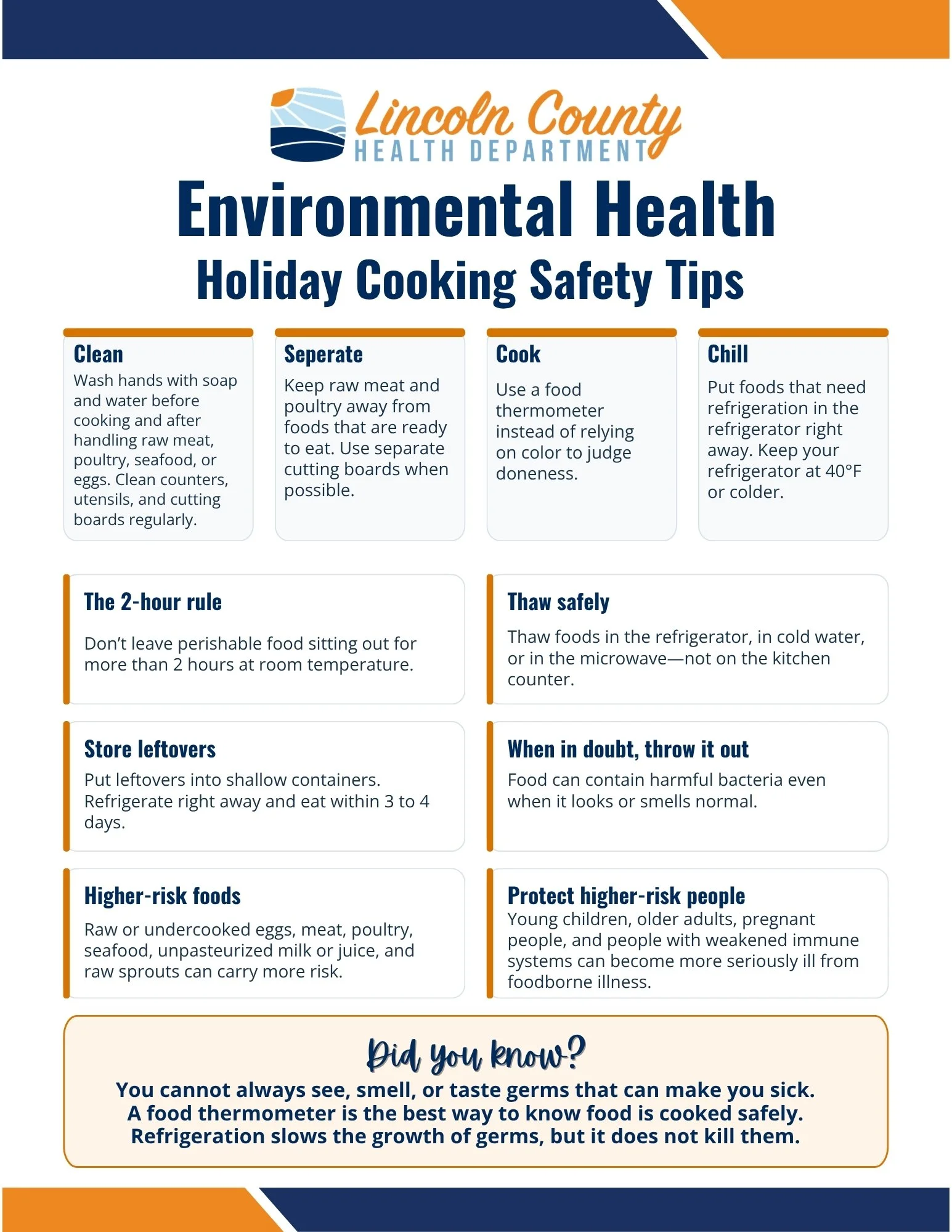
Holiday Cooking Safety Tips
The holidays are a time for gathering with family and friends, sharing favorite recipes, and enjoying special meals. While food is often the centerpiece of holiday celebrations, it's important to remember that food safety plays a key role in keeping everyone healthy.
Every year, foodborne illness affects millions of people in the United States. The good news is that many cases can be prevented by following a few simple food safety steps.
Follow the Four Basics of Food Safety
Clean
Wash your hands with soap and water before preparing food and after handling raw meat, poultry, seafood, or eggs. Be sure to clean countertops, utensils, and cutting boards regularly.
SEPARATE
Keep raw meats and poultry away from foods that are ready to eat. Using separate cutting boards for raw meat and fresh foods can help prevent cross-contamination.
Cook
Don't rely on color alone to determine whether food is fully cooked. A food thermometer is the safest way to make sure food reaches the proper temperature.
Chill
Refrigerate foods that need cooling as soon as possible. Keep your refrigerator at 40°F or below to help slow the growth of harmful bacteria.
Remember the 2-hour rule
Perishable foods should not be left at room temperature for more than two hours. If foods sit out longer than that, bacteria can multiply quickly and increase the risk of foodborne illness. If you're hosting a large meal, consider setting a timer to remind yourself when it's time to refrigerate leftovers.
Thaw and store food safely
Planning ahead can help keep holiday meals safe.
Thaw frozen foods in the refrigerator, in cold water, or in the microwave.
Never thaw food on the kitchen counter.
Store leftovers in shallow containers so they cool more quickly.
Refrigerate leftovers promptly and eat them within three to four days.
Questions about thawing a turkey? Visit https://www.fsis.usda.gov/food-safety/safe-food-handling-and-preparation/poultry/turkey-basics-safe-thawing
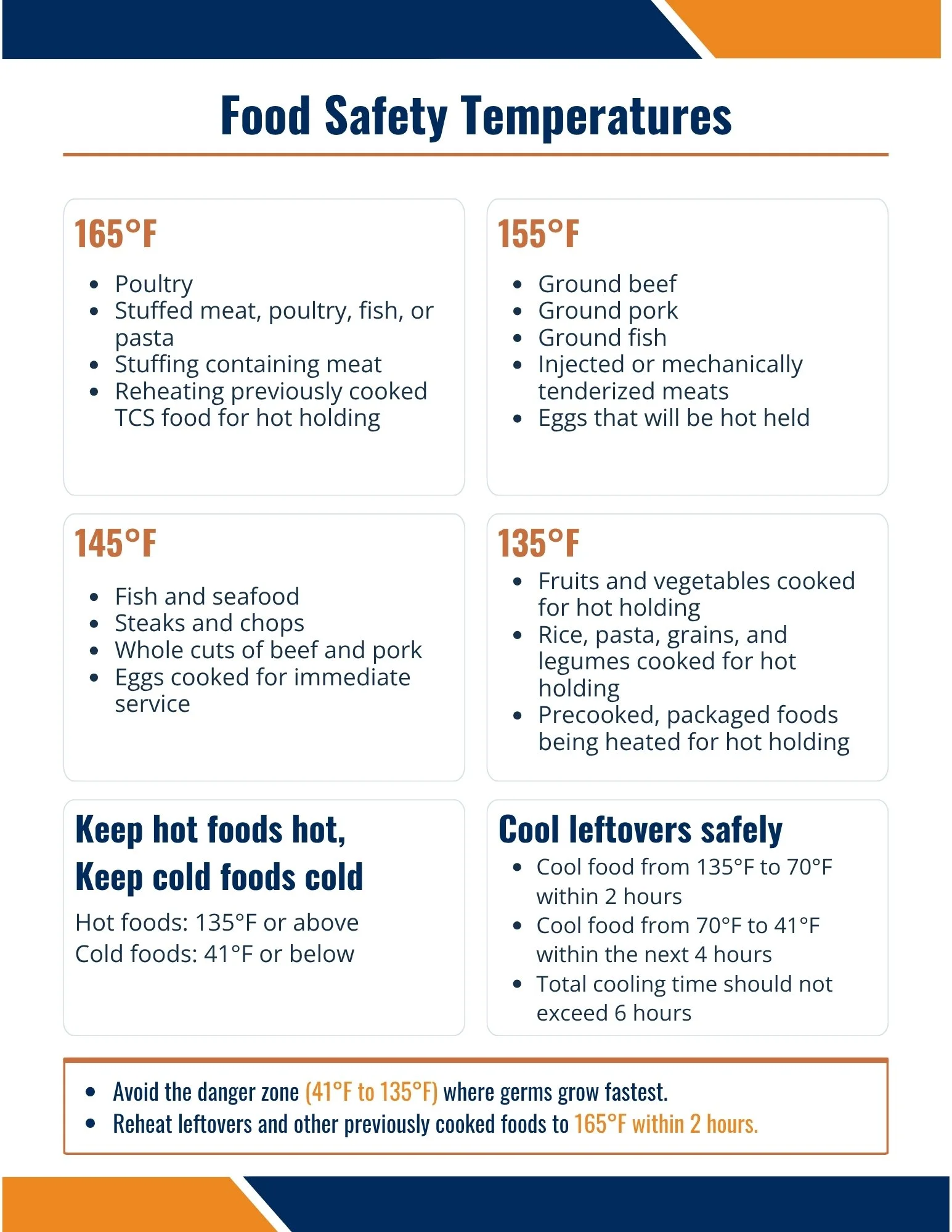
Know the proper cooking temperatures
Different foods need to reach different internal temperatures to be safe to eat.
Cook to 165°F
Poultry
Stuffed meats, poultry, fish, or pasta
Stuffing containing meat
Reheated leftovers intended for hot holding
Cook to 155°F
Ground beef
Ground pork
Ground fish
Mechanically tenderized or injected meats
Eggs held for service
Cook to 145°F
Fish and seafood
Steaks and chops
Whole cuts of beef and pork
Eggs prepared for immediate service
Safe Leftovers Matter Too
Leftovers are often one of the best parts of a holiday meal, but they need to be cooled and reheated properly.
Food should be cooled from 135°F to 70°F within two hours and then from 70°F to 41°F within the next four hours. When reheating leftovers, bring them to 165°F within two hours.
Remember: hot foods should stay at 135°F or above, and cold foods should stay at 41°F or below.
One of the most important food safety reminders is also one of the simplest: if you're not sure whether a food is safe, throw it away.
Harmful bacteria cannot always be seen, smelled, or tasted. Food may look perfectly fine and still make someone sick. Using a food thermometer, refrigerating foods promptly, and following safe food handling practices can help protect your family and guests throughout the holiday season
Enjoy a Safe and Healthy Holiday Season
Holiday meals create lasting memories. By following a few simple food safety practices, you can help ensure those memories are happy ones. Safe food handling starts with clean hands, proper cooking temperatures, and prompt refrigeration. When everyone takes a few extra precautions, holiday gatherings can be both delicious and safe.